

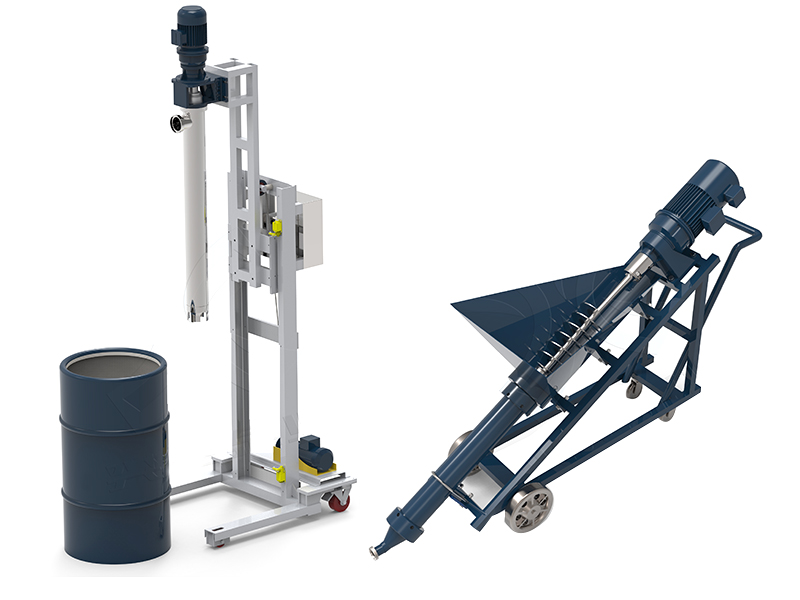
Screw pumps are a critical technology wherever engineers need
low-flow, high-pressure performance with excellent efficiency, smooth flow,
and reliable operation. This comprehensive guide explains how screw pumps work, why they are
suited to low-flow, high-pressure systems, which designs are available, and how to specify them
for demanding industrial applications.
A screw pump is a positive displacement pump that uses one or more intermeshing
screws to move fluid along the screw axis. In low-flow, high-pressure systems,
screw pumps are frequently chosen because they deliver:
Low-flow, high-pressure systems appear in many industries:
lubrication circuits, hydrostatic bearing supply, fuel injection skids,
hydraulic power units, test benches, metering and dosing systems, and
pressure boosting for specialty fluids. These systems usually demand
precise flow at pressures that may reach hundreds of bar, often under
continuous duty.
There is no universal cutoff, but in many industrial contexts a
low-flow, high-pressure system can be characterized as:
Such systems are used where the volume of fluid required is modest, but the
force needed to move or control that fluid is large. This is exactly the
operating window where screw pumps excel as low-flow,
high-pressure pumps.
Compared to centrifugal pumps, which are highly efficient at
medium-to-high flow and moderate pressure, screw pumps provide consistent
flow almost independent of pressure. This makes them well suited to:
As a positive displacement design, the screw pump delivers a fixed volume
of fluid per revolution. Pressure is generated by the resistance of the
system, up to the pump’s rated limit and the opening pressure of any
built-in or external relief valve.
Screw pumps are positive displacement pumps. They consist of one
or more helical screws rotating inside a closely fitting housing. As the screws rotate,
they trap pockets of fluid and move them continuously from the suction side to the discharge side.
The working principle can be summarized in three main steps:
formed between the screw profile and the pump casing and is carried axially along the shaft.
Since the fluid is transported in sealed cavities with continuous motion, screw pumps achieve
very low pulsation and gentle handling, which is valuable in sensitive
low-flow, high-pressure applications.
The geometry determines displacement per revolution and pressure capability.
The screw pump does not inherently “create” pressure; it generates flow.
The system resistance (valves, piping, process equipment) converts this
flow into pressure. In a low-flow, high-pressure system:
Screw pumps bring together several characteristics that align well with
low-flow, high-pressure operating requirements. The combination of
low pulsation, high-pressure capability, and efficiency makes them
a preferred technology in many demanding systems.
Because screw pumps are positive displacement pumps, the flow rate is
primarily set by pump size and speed, not by system pressure. In
low-flow, high-pressure systems where pressure can change rapidly,
this stable flow characteristic simplifies control
and sizing of downstream components.
Many screw pump designs can handle discharge pressures reaching
80–250 bar, and in certain specialized versions even higher,
depending on:
This capability is central to their use in hydraulic power units,
fuel injection skids, and other systems where low flow must be delivered
at very high pressure.
The continuous, overlapping cavities in screw pumps generate a very
smooth flow with minimal pulsation. Benefits in low-flow, high-pressure systems include:
Screw pumps can handle a broad range of viscosities, from light fuels
to heavy lubricating oils. Many low-flow, high-pressure systems involve:
The positive displacement mechanism provides consistent
volumetric efficiency over this viscosity range, especially in well-lubricated services.
Most screw pumps are self-priming, which allows them to draw fluid
from a reservoir even if the suction line is initially empty. In
low-flow, high-pressure applications with intermittent duty, this
can eliminate the need for separate priming arrangements.
Several screw pump configurations are used in low-flow, high-pressure systems.
The most common are single-screw pumps, twin-screw pumps,
and triple-screw (three-screw) pumps. Each type has specific
characteristics that affect pressure capability, flow range, and fluid compatibility.
Single-screw pumps, often referred to as Progressive cavity pumps,
consist of a single helical rotor turning inside an elastomeric stator with a double helix cavity.
While not always the first choice for clean hydraulic oils, they are used in
specialized low-flow, high-pressure systems involving difficult fluids. In many
industrial lubrication and hydraulic applications, however, multi-screw metal pumps
are preferred for their compactness and lubrication-friendly design.
Twin-screw pumps use two intermeshing screws that rotate in opposite directions.
The screws can be timing gear driven so they do not contact each other,
enabling gentle handling and the ability to run dry for short periods.
In low-flow, high-pressure systems, twin-screw pumps are selected when:
Triple-screw pumps, or three-screw pumps, consist of one
driving screw (the power rotor) and two idler screws.
The driven screw transmits torque to the idlers through a hydrodynamic film of the pumped fluid.
Three-screw pumps are widely used as low-flow, high-pressure screw pumps
in lubrication systems, hydraulic power systems, fuel oil skids, and similar applications.
Their compact design, high efficiency, and low pulsation make them particularly attractive.
| Pump Type | Typical Fluids | Pressure Range | Flow Range (Low-Flow Focus) | Key Advantages | Main Limitations |
|---|---|---|---|---|---|
| Single-Screw (Progressive Cavity) | Viscous, shear-sensitive, solids-laden | Up to ~24 bar per stage; higher with multi-stage | From fractional L/min to hundreds of L/min | Handles solids, gentle flow, good suction capability | Larger footprint, elastomer wear, not ideal for very clean light oils at ultra-high pressure |
| Twin-Screw | Clean or slightly contaminated, multiphase, wide viscosity range | Up to ~80–160 bar (design dependent) | From low single-digit L/min upward | Runs with gas entrainment, low NPSH, can tolerate short dry running | Typically higher cost, more complex timing gears |
| Triple-Screw (Three-Screw) | Clean, lubricating fluids: lube oils, hydraulic oils, fuel oils | Commonly 80–250 bar (application-specific) | From a few L/min to tens of m3/h | Very low pulsation, high efficiency, compact, excellent for low-flow high-pressure | Not suitable for abrasive solids, requires lubricating fluid |
For selecting and evaluating screw pumps in low-flow, high-pressure systems,
several performance parameters are especially important.
Flow rate in screw pumps is mostly determined by:
In low-flow, high-pressure configurations, flow is often in the range of:
The maximum working pressure depends on pump size, materials, and application.
Designers should distinguish between:
In low-flow, high-pressure screw pump service, discharge pressures may range from:
Efficiency in screw pumps is influenced by:
For well-designed screw pumps handling moderately viscous lubricating fluids:
At low flow and high pressure, the NPSH available (NPSHa) at the pump suction
may be limited by system layout or fluid properties (e.g., hot oil). Screw pumps generally have
favorable NPSH characteristics compared to many other positive displacement pumps. Nevertheless:
One of the main reasons screw pumps are chosen in low-flow, high-pressure applications is the
combination of:
This improves system reliability, especially where sensitive instrumentation,
control valves, or servo mechanisms are used.
Screw pumps, particularly three-screw and twin-screw designs, are widely used in industries
that require reliable low-flow, high-pressure performance. Some representative applications
are outlined below.
Many rotating machines, including turbines, compressors, and large gearboxes, use
forced lubrication systems. In these systems:
Screw pumps are ideal in this role because they provide stable, non-pulsating oil flow to bearings
and seals, minimizing dynamic loads and extending equipment life.
Hydraulic power units convert mechanical energy into hydraulic energy in the form of
pressurized fluid. Screw pumps in these units:
Compared with gear pumps, screw pumps offer lower noise levels and smoother flow,
which is important for precision hydraulic actuators and servo systems.
In fuel supply systems for burners, boilers, and engines, screw pumps are used
to deliver low-flow, high-pressure fuel oil or diesel:
Three-screw pumps are a standard choice in such systems because they are
compact, efficient, and handle light to medium viscosity fuels well.
Screw pumps are frequently used in test benches and
pressure testing rigs where low flow is required at
very high pressure, such as:
The combination of accurate flow control and smooth pressure buildup
helps protect sensitive test pieces and instrumentation.
Many process compressors, mechanical seals, and special bearings require
a flow of cooling or sealing fluid at elevated pressure but relatively low flow:
Screw pumps reliably maintain these flows and pressures, improving
equipment reliability and process safety.
In cases where the required flow is low and the operating pressure is high,
screw pumps can serve as metering or dosing pumps for:
Speed control and accurate volumetric displacement help achieve precise dosing,
while the high-pressure capability ensures injection into pressurized systems.
Designing screw pumps for low-flow, high-pressure applications requires careful
attention to rotor geometry, clearances, materials, sealing arrangements, and
thermal effects. These factors have a direct impact on pump reliability and efficiency.
The geometry of the screws and housing determines:
In low-flow, high-pressure designs, rotors often have:
Typical materials for screw pumps in high-pressure applications include:
Material selection must consider:
High-pressure operation requires robust sealing of the drive shaft:
In some lubrication systems, the fluid itself serves as seal flush and cooling medium, improving
seal life and reliability.
At high pressures, axial hydraulic forces act on the screws. Bearing design must:
Thrust balancing arrangements, such as hydraulic balancing pistons or opposed rotor designs, may
be used to limit bearing load and increase service life.
In low-flow, high-pressure screw pumps, power input and pressure drop can generate heat:
Designs may incorporate cooling arrangements, such as:
In low-flow, high-pressure systems, engineers can choose among screw pumps,
gear pumps, piston/plunger pumps, vane pumps, and others. Screw pumps offer
a set of advantages that often make them the preferred option.
Both screw pumps and gear pumps are positive displacement designs commonly
used for oils. However, in low-flow, high-pressure applications:
Reciprocating piston and plunger pumps are also capable of very high pressure at low flow.
Compared to these pumps, screw pumps offer:
However, piston and plunger pumps may still be preferred when:
Vane pumps are used in many hydraulic systems, but screw pumps have particular strengths:
For small compact systems with moderate pressure, vane pumps may compete; for robust
low-flow, high-pressure duty, screw pumps often offer longer life and better performance.
Proper pump selection is crucial to achieve reliability and efficiency.
Below are general guidelines for selecting screw pumps in low-flow, high-pressure applications.
Start by accurately defining:
For most low-flow, high-pressure systems with clean lubricating fluids,
a three-screw pump is a strong candidate. Consider:
Once the pump type is chosen:
Use manufacturer performance data or generic performance curves to check:
Verify that:
Every positive displacement pump in a low-flow, high-pressure system must be protected
against overpressure. Typical arrangements include:
Size relief valves for full pump capacity at maximum drive speed. Set opening pressure
below the maximum allowable working pressure of the pump and system.
Correct installation has a significant impact on the performance and service life of
screw pumps in low-flow, high-pressure applications. Key considerations include foundation,
alignment, suction conditions, and discharge piping design.
Mount the pump and driver on a rigid baseplate with:
Good suction conditions are essential for screw pump reliability:
Since screw pumps in low-flow, high-pressure systems develop high discharge pressures:
In applications with tight clearances and high pressures, fluid cleanliness is critical:
Before starting, vent air from the pump casing and suction line:
Operating a screw pump in a low-flow, high-pressure system involves speed control, pressure regulation,
and integration with instrumentation and safety systems.
Because discharge flow of screw pumps is directly proportional to rotational speed, VFDs
are commonly used to:
In low-flow, high-pressure systems, pressure can be controlled by:
Recommended instrumentation includes:
Protective functions can trip the pump on:
Screw pumps are known for reliability and long service intervals when properly applied and maintained,
even in demanding low-flow, high-pressure systems.
Common issues in high-pressure screw pumps include:
Proactive monitoring and adequate filtration significantly reduce the likelihood of these problems.
When handling clean, lubricating fluids under well-controlled operating conditions,
screw pumps in low-flow, high-pressure systems can achieve:
The following tables provide illustrative specifications for screw pumps used in low-flow,
high-pressure applications. These are generic examples intended to show typical ranges and
parameters considered in engineering specifications.
| Parameter | Low Range | Typical Range | High Range (Special Designs) |
|---|---|---|---|
| Flow Rate | 0.1–1 m3/h | 1–20 m3/h | 20–50 m3/h |
| Discharge Pressure | 20–40 bar | 40–160 bar | 160–250+ bar |
| Fluid Viscosity | 2–10 cSt | 10–200 cSt | 200–1,000+ cSt |
| Fluid Temperature | ?20°C to 40°C | 0°C to 120°C | ?40°C to 200°C |
| Rotational Speed | 300–900 rpm | 900–3,000 rpm | Up to ~4,000 rpm (design-specific) |
| Overall Efficiency | 60–70% | 70–85% | 85%+ (optimized conditions) |
| Item | Specification |
|---|---|
| Pump Type | Three-screw positive displacement pump |
| Flow Rate | 5 m3/h at 1,500 rpm (at 40 cSt) |
| Discharge Pressure (Continuous) | 120 bar |
| Maximum Allowable Working Pressure | 150 bar |
| Fluid | Mineral lubricating oil, ISO VG 46 |
| Fluid Temperature Range | 10–80°C |
| Materials (Casing) | Carbon steel |
| Materials (Rotors) | Alloy steel, hardened and ground |
| Shaft Seal | Single balanced mechanical seal |
| Direction of Rotation | Clockwise viewed from shaft end |
| Drive | Electric motor via flexible coupling |
| Mounting Arrangement | Horizontal foot-mounted on baseplate |
| Built-In Relief Valve | Yes, set to 135 bar |
| Viscosity Range | 10–200 cSt |
| NPSHr at Rated Conditions | 1.5 m |
| Design Standards | Applicable industry standards for screw pumps and pressure equipment |
| Parameter | Three-Screw Pump | Gear Pump |
|---|---|---|
| Flow Rate | 3 m3/h | 3 m3/h |
| Discharge Pressure | 160 bar | 160 bar |
| Fluid | Hydraulic oil, 46 cSt | Hydraulic oil, 46 cSt |
| Pulsation | Very low | Moderate |
| Noise Level | Low | Higher |
| Efficiency at Rated Conditions | ~80–85% | ~70–80% |
| Relative Initial Cost | Higher | Moderate |
| Suitability for Continuous Duty | Excellent | Good |
A low-flow, high-pressure application is typically one where required pump flow is relatively small
(often below 50 m3/h and frequently below 10 m3/h) but discharge pressure is high (commonly 20–250 bar).
Screw pumps suit these applications due to their ability to generate stable flow at high pressure with
low pulsation.
Screw pumps are often preferred because they:
Traditional three-screw pumps are best suited to clean, lubricating fluids. For non-lubricating or
abrasive fluids, special designs (such as certain twin-screw or progressive cavity pumps) may be
more appropriate, but careful material and configuration choices are required. Not all screw pumps
are suitable for abrasive service.
Flow can be controlled by:
In many cases, screw pumps do not require pulsation dampeners because their flow is inherently smooth
compared to reciprocating pumps. However, in very sensitive systems or where extremely precise
pressure stability is required, additional dampening may be considered.
Maintenance typically includes:
Many screw pumps have self-priming capability, especially when used with viscous or lubricating fluids.
However, for reliable operation, flooded suction and proper venting are usually recommended, particularly
at high pressures and critical services.
Screw pumps are a proven, reliable solution for low-flow, high-pressure systems in
a wide range of industrial applications. Their advantages include:
Three-screw and twin-screw pumps dominate in clean oil, lubrication, hydraulic, and fuel systems,
while single-screw (progressive cavity) designs serve specialized duties with challenging fluids.
Correct selection, installation, and operation ensure long-term, reliable performance in demanding
low-flow, high-pressure environments.
```

Copyright ? Jiangsu Longjie Pump Manufacturing Co., Ltd.



 Phone
Phone
Comment
(0)