

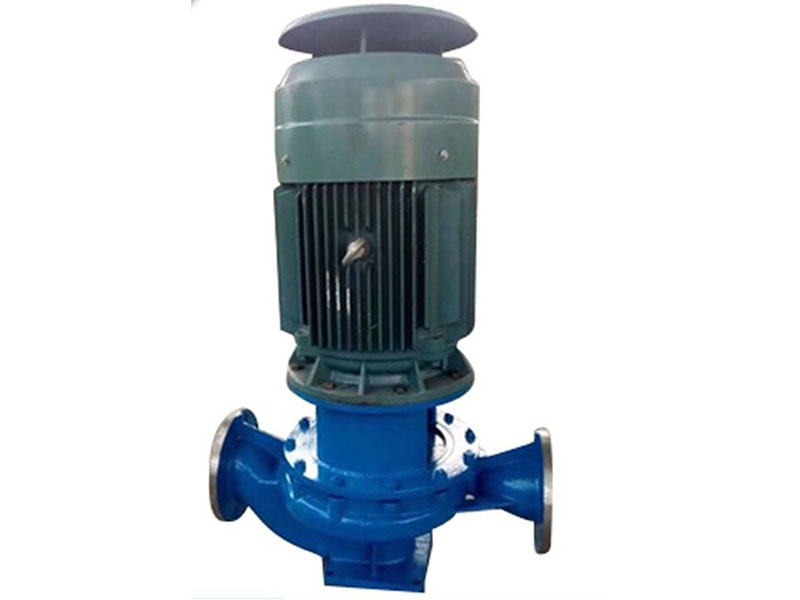
A single-screw pump, often referred to as a single screw pump or
progressive cavity pump, has become one of the most versatile pumping
solutions in oil extraction and oil and gas production.
From artificial lift in marginal wells to surface transfer of high-viscosity crude oil,
the single-screw pump offers a combination of high efficiency, low shear, wide
viscosity range, and reliable performance that is difficult to match with other pump types.
This page provides a comprehensive, SEO-friendly reference on the key advantages of using
a single-screw pump in oil extraction. It covers fundamental definitions, working principles,
major benefits, technical parameters, selection guidelines, and typical applications throughout
the upstream, midstream, and downstream segments of the industry.
Table of Contents
A single-screw pump is a type of positive displacement rotary pump
in which a single helical rotor rotates inside a double-helix stator. The stator is usually made
from an elastomer bonded to a steel tube, and the rotor is typically a hardened metal screw
with a precise geometric profile. As the rotor turns, it forms a series of
progressing cavities that move the fluid from the suction side to the discharge side.
In the oil and gas industry, the single-screw pump is very often called a
progressive cavity pump (PCP), particularly in downhole artificial lift
applications. Whether it is installed at the surface or downhole, the principle remains the same:
the pump displaces a fixed volume of fluid per revolution, creating a steady, pulsation-free flow.
| Component | Function in Oil Extraction |
|---|---|
| Rotor | A single metal screw (usually alloy steel or stainless steel) with a helical profile. Rotates eccentrically inside the stator to create sealing cavities that carry crude oil, water, or multiphase fluid along the pump axis.
|
| Stator | An elastomer-lined tube with an internal double-helix geometry. Forms the mating surface with the rotor. Provides the sealing line and defines the volumetric displacement of the single-screw pump. Material is selected according to crude composition, temperature, and chemical environment.
|
| Drive Shaft / Rod String | Transmits torque from the prime mover (motor or engine) to the rotor. In downhole artificial lift, this is a rod string or hollow rod; in surface installations, it is a drive shaft connected through a universal joint.
|
| Coupling and Joints | Compensate for eccentric orbital motion of the rotor. Allow the motor’s rotation to be converted into the required motion inside the stator while maintaining mechanical integrity in harsh well conditions.
|
| Housing / Pressure Casing | Contains the rotor–stator assembly and withstands wellhead or pipeline pressure. Provides connections to suction and discharge piping or production tubing.
|
| Seal System | Mechanical seals, stuffing boxes, or sealing glands prevent leakage at the drive end. In surface pumps for oil extraction, seal integrity is crucial for avoiding environmental contamination.
|
The working principle of a single-screw pump is based on the interaction between a
single-helix rotor and a double-helix stator. The stator has one more helix than the rotor, creating
closed cavities that move progressively as the rotor turns.
When the rotor rotates inside the stator:
This principle allows the single-screw pump to deliver constant flow at a given speed,
even with fluctuating discharge pressures, as long as internal leakage is controlled by proper rotor–stator fit.
Under ideal conditions, the theoretical flow rate of a single-screw pump used in oil extraction is:
Q_theoretical = V_cavity × n × N
In practice, there is some internal slip, especially at higher differential pressures.
But for typical oil extraction applications, flow still remains nearly proportional
to pump speed, which is a key advantage for simple, accurate production control.
The single-screw pump does not generate pressure directly; rather, it creates flow.
Discharge pressure is a result of system resistance (friction in tubing, choke valves,
separator pressure, etc.) up to the maximum differential pressure the rotor–stator pair can withstand.
Typical maximum differential pressures per pump stage for oilfield applications range from:
Multiple stages are combined in series to reach the required total differential pressure
for deep wells or long-distance crude transfer.
Single-screw pumps play a crucial role across the lifecycle of an oilfield. They appear in
downhole artificial lift systems, wellhead surface facilities,
gathering lines, processing plants, and even
refinery units whenever a robust, positive displacement pump is needed.
The use of a single-screw pump in oil extraction offers a series of advantages that
strongly influence field economics, production stability, and equipment reliability. The table below
summarizes the key benefits, followed by detailed explanations for each advantage.
| Advantage | Impact on Oil Extraction |
|---|---|
| High efficiency at wide viscosity range | Maintains good volumetric and hydraulic efficiency from light oil to ultra-heavy crude. |
| Excellent handling of multiphase mixtures | Pumps oil, water, and gas together without separate gas handling equipment. |
| Low shear, gentle pumping | Reduces emulsion formation and maintains oil–water separation quality. |
| Sand and solids tolerance | Accommodates abrasive particles and formation sand better than many other pumps. |
| Stable, pulsation-free flow | Improves measurement accuracy, downstream process stability, and reservoir management. |
| Flexible speed control | Simple production rate adjustment via variable frequency drive (VFD) or speed controller. |
| Compact footprint and flexible configuration | Ideal for space-constrained well pads, offshore platforms, and mobile units. |
| High suction capability (good NPSH characteristics) | Reduces risk of cavitation and allows for deeper suction lifts in some surface setups. |
| Energy-efficient artificial lift in many cases | Lower power consumption per barrel produced in heavy oil and low-rate wells. |
| Simple, robust mechanical construction | Low maintenance requirement and long mean time between failures (MTBF). |
Single-screw pumps are renowned for their ability to handle fluids across an extremely wide
viscosity range. In oil extraction, this means:
Unlike centrifugal pumps whose efficiency collapses as viscosity increases, single-screw pumps
often improve volumetric efficiency with moderate increases in viscosity, up to a limit
where friction and rotor–stator wear become dominant.
Reservoirs often produce multiphase flow of oil, water, and gas. A key advantage of
the single-screw pump in oil extraction is its ability to handle gas fractions that
would cause other pumps to lose prime or suffer severe performance degradation.
While every installation has limits on gas volume fraction, properly selected single-screw pumps
are more forgiving to gas presence than many other positive displacement and dynamic pump types.
The low shear characteristics of a single-screw pump are critically important in
oil extraction, especially where:
The geometry of the progressive cavity design moves fluid smoothly and gradually
without rapid velocity changes. This minimizes:
Many oil wells produce formation sand, scale particles, and fines. In such cases,
the choice of pump technology directly impacts downtime and maintenance. A single-screw pump:
While sand does cause wear and must be managed, single-screw pumps show
comparatively better tolerance than many alternatives in the same conditions.
The nearly pulsation-free discharge of a single-screw pump is a major operational
advantage in oil extraction:
Because output is directly proportional to rotational speed, a single-screw pump
provides:
This capability is particularly valuable for artificial lift optimization and
production surveillance strategies.
Single-screw pumps are known for good suction performance and relatively low
Net Positive Suction Head Required (NPSHr). In oil extraction:
Although ultimate efficiency depends on proper design and operation, single-screw pumps often:
With relatively few moving parts and a straightforward mechanical design, a single-screw pump offers:
Single-screw pumps can be arranged in many layouts:
This flexibility is especially attractive on:
In the context of oil extraction, single-screw pumps compete with other pump technologies,
each with its own strengths. The table below compares the single-screw pump with
some common alternatives used for artificial lift and surface transfer.
| Feature | Single-Screw Pump (PCP) | Centrifugal Pump | Plunger/Reciprocating Pump | ESP (Electric Submersible Pump) |
|---|---|---|---|---|
| Flow type | Positive displacement, low pulsation | Dynamic, high-speed rotary | Positive displacement, high pulsation | Dynamic, high-speed multistage |
| Viscosity handling | Excellent, very wide range | Poor at high viscosity | Moderate, depends on valves | Limited, poor for heavy oil |
| Gas handling | Good, tolerates free gas | Poor, gas binding risk | Moderate, gas may affect valves | Poor, gas locking issues |
| Sand and solids tolerance | Good with proper materials | Limited, high erosion risk | Limited by valves and plunger wear | Limited, erosion and plugging risk |
| Shear characteristics | Low shear | High shear | Moderate to high shear | High shear |
| Flow control | Simple via speed adjustment | Requires throttling or VFD; efficiency loss at part-load | Stroke and speed adjustment required | Possible via frequency control but complex |
| Installation depth (artificial lift) | Deep wells, deviated/horizontal | Surface applications only | Moderate depth, mostly vertical wells | Very deep wells, mostly vertical |
| Best suited for | Heavy oil, multiphase, viscous and abrasive fluids | Clean, low-viscosity fluids at high flow | High pressure, relatively clean fluids | High-rate, low-viscosity wells with low gas |
This comparison highlights why the single-screw pump in oil extraction is especially
attractive in heavy oil, viscous, and multiphase production scenarios, where other pump
types face limitations.
To correctly apply a single-screw pump in oil extraction, it is important to understand key
performance parameters and specification ranges. The following table
lists typical values for oilfield applications (actual limits depend on design and manufacturer).
| Parameter | Typical Range for Oil Extraction | Notes |
|---|---|---|
| Flow rate | From < 10 bbl/d up to > 10,000 bbl/d (< 1.5 to > 1,600 m3/d) | Single-screw pumps cover very small to relatively large wells and transfer services. |
| Differential pressure (ΔP) | Up to 100–300 bar or more in multistage configurations | Each stage typically adds a fixed ΔP; stages are combined to reach total required lift. |
| Viscosity range | 1 to > 100,000 cP | Excellent performance with high-viscosity crude; speed must be reduced at very high viscosity. |
| Operating temperature | -20°C to 180°C (approx.) | Limited by elastomer stator material and seals; high-temperature elastomers are available. |
| Gas volume fraction (GVF) | Typically up to 40–60% at intake (depends on design) | Performance degrades with higher gas fractions; careful analysis needed for high GVF wells. |
| Solids concentration | Up to several percent by volume | Requires abrasion-resistant materials and controlled speed to minimize wear. |
| Speed range | 100–500 rpm (downhole), 200–1,800 rpm (surface) | Lower speeds generally improve stator life in abrasive or high-viscosity service. |
| Typical efficiency | Overall 50–80% | Varies with viscosity, differential pressure, speed, and rotor–stator design. |
| Maximum well depth (PCP artificial lift) | Often 2,000–3,000 m or more | Limited by rod string design, torque transmission, and temperature/pressure conditions. |
| Specification | Example Value |
|---|---|
| Nominal flow rate | 120 m3/h (approx. 755 bbl/d) |
| Maximum differential pressure | 24 bar |
| Speed range | 300–900 rpm |
| Fluid viscosity | 5–10,000 cP |
| Design temperature | -10°C to 120°C |
| Solids content | Up to 2% by volume, grain size < 3 mm |
| Connections | Flanged suction and discharge, ANSI or API standard |
| Drive type | Electric motor with VFD (explosion-proof as required) |
Single-screw pumps are used in a broad variety of tasks related to oil extraction.
The examples below illustrate how the advantages of the technology translate into practical benefits
across different application scenarios.
Selecting the right single-screw pump for oil extraction requires careful
evaluation of reservoir characteristics, well conditions, and surface facility constraints.
The following table summarizes important selection criteria.
| Selection Factor | Considerations for Oil Extraction |
|---|---|
| Required flow rate | Define production targets (bbl/d or m3/d). Ensure the pump can operate efficiently at expected minimum and maximum rates using speed control.
|
| Total dynamic head / differential pressure | Calculate the pressure required to lift fluid from downhole to surface or through pipelines. Select the number of stages accordingly.
|
| Fluid properties | Measure viscosity versus temperature, density, gas content, solids concentration, and presence of corrosive components (H?S, CO?, chlorides).
|
| Temperature and pressure conditions | Confirm bottom-hole temperature, wellhead pressure, and surface ambient temperatures. Choose stator elastomer and seals that can handle extremes.
|
| Gas volume fraction | Estimate expected free gas at pump intake. For high GVF, consider special gas-handling designs or locate pump deeper to minimize free gas.
|
| Sand and solids loading | Determine expected sand production and particle size. Use abrasion-resistant rotor coatings, high-strength elastomers, and lower operating speeds as necessary.
|
| Well deviation and geometry | For downhole PCPs, consider dogleg severity, horizontal sections, and tubing design. Single-screw pumps often excel in deviated and horizontal wells.
|
| Power supply and drive | Evaluate availability of electric power, need for explosion-proof motors, or alternative drives (diesel, gas engine). Ensure compatibility with VFD control.
|
| Material compatibility | Select metallic materials (rotor, housing, fasteners) and elastomers to resist corrosion, swelling, and chemical attack by oilfield fluids and additives.
|
| Maintenance and service strategy | Consider access to skilled technicians, spare parts logistics, and well interventions. Choose designs that minimize non-productive time (NPT) during repairs.
|
The rotor and stator geometry determines volumetric displacement per revolution and pressure
capability per stage. For oil extraction:
Elastomer selection for the stator is one of the most critical design decisions. Factors include:
Metal components such as rotor, shaft, and housing must meet corrosion resistance
requirements for the specific reservoir environment, particularly in sour service.
Single-screw pumps are installed in several typical configurations, depending on whether they
are used for artificial lift or surface transfer.
The maintenance profile of a single-screw pump in oil extraction is generally favorable,
provided that speed, temperature, and chemical compatibility are properly managed.
The design and operating characteristics of single-screw pumps provide several
environmental and safety advantages for oil extraction operations.
The key advantages of using a single-screw pump in oil extraction can be summarized as follows:
For operators seeking to increase recovery from heavy oil reservoirs, manage complex
multiphase flows, or improve the efficiency of surface facilities, the single-screw pump
offers a proven, flexible, and cost-effective solution. Its combination of
hydraulic performance, mechanical simplicity, and adaptability to hostile oilfield environments
makes it one of the most valuable pump technologies in modern oil and gas production.
In oil extraction terminology, a single-screw pump and a
progressive cavity pump (PCP) refer to the same basic technology. The term
“single-screw” highlights the use of one rotor, while “progressive cavity” describes the
pumping principle based on progressing cavities within the stator.
Single-screw pumps maintain high efficiency across a wide viscosity range,
tolerate sand and gas, and generate a smooth flow at relatively low speed. These characteristics
allow reliable lifting and surface transfer of heavy, viscous crude oils where centrifugal
and other dynamic pumps become inefficient or unreliable.
Yes, one of the key advantages of single-screw pumps in oil extraction is
their capability to handle gas–liquid mixtures. They can typically cope
with moderate free gas fractions at the intake. However, performance will eventually degrade
as gas volume increases, and very high gas fractions may require specialized designs or
additional gas separation.
The maximum differential pressure depends primarily on:
Exceeding the recommended differential pressure accelerates wear and can lead to premature
stator failure or rotor damage.
Flow rate is mainly controlled by adjusting the rotational speed of the pump.
In surface installations and artificial lift systems, this is commonly achieved with a
variable frequency drive (VFD) on the motor. In some cases, gearboxes or
mechanical speed controllers are also used.
The most common wear mechanisms include:
Proper material selection, speed limitation, and solids management significantly reduce
these wear mechanisms.
Yes. Their compact footprint, high reliability, and ability to handle challenging fluids
make them well-suited for offshore platforms and floating production units. They are used
in offshore fields for produced water handling, multiphase boosting, and heavy oil production,
provided that materials and designs are adapted to offshore standards and environmental conditions.
By improving the efficiency and reliability of artificial lift and surface
transfer, single-screw pumps help:
These contributions translate directly into better field productivity and profitability.
```

Copyright ? Jiangsu Longjie Pump Manufacturing Co., Ltd.



 Phone
Phone
Comment
(0)