

Stainless steel screw pumps are critical components in many industrial processes, especially where
hygiene, corrosion resistance, and precise fluid handling are required. To keep these pumps operating
reliably and efficiently, specialized stainless steel screw pump maintenance tools are
essential. This guide provides detailed, industry-generic information suitable for use in technical blogs,
industrial directory pages, and knowledge bases.
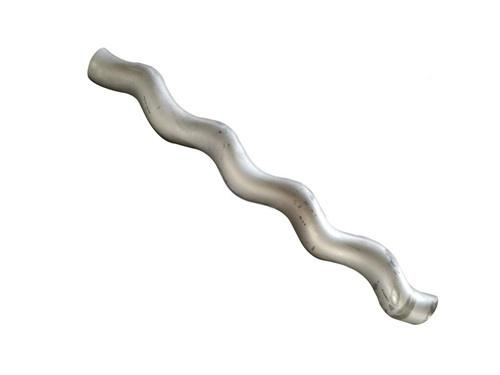
A stainless steel screw pump (often referred to as a progressive cavity pump, single-screw pump,
or helical rotor pump) uses a rotating screw-shaped rotor inside a stator to convey fluids. When
constructed from stainless steel, these pumps are widely used in:
Routine and predictive maintenance directly influence pump life, process uptime, and product quality.
Properly selected and correctly used stainless steel screw pump maintenance tools make
service tasks safer, faster, and more repeatable, while minimizing the risk of damage to precision
stainless steel components such as rotors, shafts, and mechanical seals.
Stainless steel screw pump maintenance tools are a group of hand tools, measuring
instruments, hydraulic devices, lifting accessories, and cleaning equipment specifically applied to
the service, overhaul, inspection, adjustment, and assembly of screw pumps manufactured from stainless steel.
In an industrial context, these tools are designed to:
Most stainless steel screw pump maintenance toolkits can be organized into functional categories:
Using dedicated stainless steel screw pump maintenance tools, instead of improvised or non-specialized
tools, offers significant operational advantages.
The following table summarizes the main categories of
stainless steel screw pump maintenance tools commonly used in industry.
| Category | Primary Function | Typical Tools Included |
|---|---|---|
| Disassembly & Assembly | Safe removal and installation of pump components | Rotor extraction tools, stator pullers, coupling wrenches, spanners, impact sockets, threaded puller bars, hydraulic pullers
|
| Measurement & Inspection | Verify dimensions, wear, and tolerances | Vernier calipers, micrometers, dial indicators, feeler gauges, surface roughness testers, bore gauges
|
| Lubrication & Cleaning | Apply lubricants and remove residues or scale | Grease guns, oil cans, CIP-compatible cleaning hoses, stainless steel brushes, flushing rigs, solvent sprayers
|
| Alignment & Balancing | Align pump and motor; reduce vibration | Laser alignment kits, dial alignment sets, straight edges, feeler gauges, balancing weights (where applicable)
|
| Sealing & Gasket | Install and service mechanical seals and gaskets | Seal setting jigs, O-ring picks, gasket cutters, sealant applicators, seal face handling tools
|
| Lifting & Handling | Move heavy pump parts safely | Lifting slings, eyebolts, beam clamps, hoists, trolleys, rotor supports, transport cradles
|
| Safety & PPE | Protect personnel during maintenance | Safety glasses, cut-resistant gloves, chemical-resistant gloves, safety shoes, hearing protection
|
| Condition Monitoring | Predictive maintenance and diagnostics | Vibration analyzers, temperature guns, ultrasonic leak detectors, pressure gauges, flow meters
|
Disassembly of a stainless steel screw pump must protect highly finished stainless rotor surfaces,
precision fits, and stator elastomer integrity. Specialized tools help achieve this without causing
misalignment or scoring.
Screw pump rotors are typically stainless steel with a polished surface and precise geometry.
Rotor extraction tools are designed to:
| Parameter | Typical Range | Notes for Screw Pump Maintenance |
|---|---|---|
| Applicable Rotor Diameter | 25 – 200 mm | Match extractor jaws or clamps with rotor diameter range. |
| Maximum Axial Pulling Force | 20 – 200 kN | Higher capacity required for large, press-fit or corroded assemblies. |
| Material / Contact Surfaces | Hardened steel with protective pads | Pads or sleeves prevent stainless steel surface damage. |
| Drive Method | Manual, hydraulic, or mechanical screw | Hydraulic versions preferred for large industrial screw pumps. |
| Adjustment Mechanism | Telescopic or adjustable arms | Allows one tool to serve multiple pump frame sizes. |
Stator pullers are essential screw pump maintenance tools used to remove stators from pump casings
without tearing elastomers or damaging stator housings.
Couplings connect the screw pump rotor to the drive shaft or motor. For stainless steel screw pumps:
Common fasteners on stainless steel screw pumps include metric or imperial bolts, nuts, and studs.
Standard but well-maintained tools are used:
Controlled tightening is crucial to maintain uniform gasket compression, mechanical seal performance,
and flange integrity on stainless steel screw pumps. Over-tightening can distort casings and
under-tightening can lead to leaks.
| Tool Type | Torque Range | Accuracy | Common Applications |
|---|---|---|---|
| Click-Type Torque Wrench | 10 – 300 Nm | ±4% of reading | Standard pump casing bolts, bearing housing fasteners |
| Digital Torque Wrench | 5 – 400 Nm | ±2% of reading | Critical flange joints, mechanical seal housing bolts |
| Hydraulic Torque Wrench | 200 – 5,000 Nm | ±3% of reading | Large screw pump skids, pipeline flanges, heavy-duty installations |
| Torque Screwdriver | 0.3 – 10 Nm | ±6% of reading | Instrumentation covers, electrical terminal connections |
Precise measurement and documentation are central to stainless steel screw pump maintenance.
Measurement tools verify whether components are within service limits or require replacement.
and bolt sizes.
or bearing journals.
and seal chambers.
| Component | Measured Parameter | Typical Tool | Maintenance Consideration |
|---|---|---|---|
| Rotor (Stainless Steel) | Diameter, surface wear, ovality | Micrometer, caliper, surface gauge | Excess wear leads to reduced volumetric efficiency. |
| Stator | Bore diameter, wear pattern | Bore gauge, visual inspection | Changes in interference fit affect pumping performance. |
| Pump Shaft | Runout, journal diameter | Dial indicator, micrometer | High runout leads to seal failure and vibration. |
| Mechanical Seal Faces | Flatness, surface finish | Optical flat, feeler gauges | Poor flatness increases leakage risk. |
| Bearings | Internal clearance, wear | Feeler gauges, dial gauge | Excess play or noise indicates need for replacement. |
Cleanliness is vital in stainless steel screw pump applications, especially in food, beverage,
and pharmaceutical industries. Proper cleaning and lubrication tools keep pumps sanitary and
mechanically sound.
CIP (Cleaning-In-Place) systems – integrated with stainless steel screw pumps
to remove residues without dismantling the equipment.
High-pressure cleaning hoses – used with compatible nozzles to flush pump
internals during maintenance.
Stainless steel brushes and scrapers – for manual removal of deposits from
non-product-contact surfaces.
Spray bottles and solvent sprayers – for controlled application of cleaning agents.
Proper lubrication of bearings, couplings, and gearboxes is a central part of screw pump
maintenance:
controlled amounts of lubricant.
| Tool Type | Typical Capacity | Pressure Capability | Usage in Screw Pump Maintenance |
|---|---|---|---|
| Manual Grease Gun | 400 – 600 cm3 | Up to 40 MPa | Greasing pump bearings and motor bearings. |
| Pneumatic Grease Gun | 400 – 800 cm3 | Up to 70 MPa | High-frequency greasing in large plants. |
| Automatic Lubricator | 60 – 250 cm3 | Low to medium pressure | Continuous lubrication of remote or critical bearings. |
| Oil Can / Oiler | 200 – 500 ml | Gravity or hand-pump | Lubricating couplings, linkages, and gear mechanisms. |
Alignment tools play a key role in stainless steel screw pump maintenance because misalignment between
the pump and motor leads to excessive vibration, premature bearing failure, and mechanical seal damage.
Laser alignment systems are widely used due to their speed and accuracy:
Dial gauge kits remain a robust, cost-effective option for many installations:
| Pump Power Range | Speed | Allowable Offset Misalignment | Allowable Angular Misalignment |
|---|---|---|---|
| Up to 15 kW | ≤ 1500 rpm | ≤ 0.10 mm | ≤ 0.2 mm / 100 mm |
| 15 – 75 kW | 1500 – 3000 rpm | ≤ 0.05 – 0.08 mm | ≤ 0.15 mm / 100 mm |
| Above 75 kW | ≥ 3000 rpm | ≤ 0.03 – 0.05 mm | ≤ 0.10 mm / 100 mm |
Values may vary depending on pump design and criticality, but this table illustrates the target
precision supported by modern alignment tools.
Screw pump reliability often depends on the integrity of mechanical seals, O-rings, and static gaskets.
Dedicated tools reduce the likelihood of damage during installation or removal.
respect to the stationary face.
or disassembling seal cartridges.
| Seal Type | Maintenance Tools | Typical Checks | Common Causes of Failure |
|---|---|---|---|
| Mechanical Seal (Single) | Seal setting jig, torque wrench, dial indicator | Face flatness, spring length, runout | Misalignment, dry running, contamination |
| Mechanical Seal (Double) | Seal compression tool, leakage monitoring equipment | Barrier fluid integrity, face wear | Incorrect barrier pressure, improper installation |
| O-Ring Seals | O-ring picks, groove gauges | Hardness, deformation, surface damage | Chemical attack, incorrect material selection |
| Flat Gaskets | Gasket cutters, scrapers, torque wrenches | Compression, seating, uniform contact | Over-tightening, surface damage, re-use of gaskets |
Many stainless steel screw pump components, such as large rotors, casings, and motor assemblies,
are heavy and require safe lifting practices. Proper lifting tools are a critical part of any
screw pump maintenance toolkit.
Condition monitoring supports predictive maintenance strategies for stainless steel screw pumps,
allowing maintenance to be scheduled based on actual condition instead of fixed intervals.
| Parameter | Diagnostic Tool | Typical Indication | Possible Cause |
|---|---|---|---|
| Increased Vibration | Vibration analyzer | Vibration level above baseline | Misalignment, bearing wear, rotor imbalance |
| High Bearing Temperature | IR thermometer, RTD | Temperature above recommended limit | Insufficient lubrication, overload, misalignment |
| Reduced Flow | Flow meter | Flow below design value | Rotor or stator wear, suction restrictions |
| Pressure Fluctuations | Pressure gauge, transmitter | Unstable discharge pressure | Air entrainment, cavitation, process variation |
The following high-level steps illustrate where specific
stainless steel screw pump maintenance tools are typically applied during
standard service operations.
The following tables summarize example composition and specifications of comprehensive
stainless steel screw pump maintenance toolkits. These tables are generic and suitable
for reference or for structuring product descriptions and industrial directory listings.
| Tool Group | Representative Tools | Quantity (Typical) | Remarks |
|---|---|---|---|
| Disassembly & Assembly | Rotor extractor, stator puller, spanner set, socket set | 1 set each | Matched to pump frame sizes used on site. |
| Torque Tools | Click torque wrench, digital torque wrench | 2 – 3 pieces | Covering low, medium, and high torque ranges. |
| Measurement & Inspection | Calipers, micrometers, dial indicators, feeler gauges | Multiple | With calibration certificates. |
| Alignment | Laser alignment system, straight edge | 1 set | Shared between multiple pumps. |
| Sealing & Gasket | O-ring picks, gasket scrapers, seal tools | 1 set | Includes non-metallic picks for soft surfaces. |
| Cleaning & Lubrication | Grease gun, oil can, cleaning brushes | Several | Selected based on lubricant and cleaning agent types. |
| Lifting & Handling | Slings, eyebolts, rotor stands | As required | Rated for maximum component weights. |
| Safety & PPE | Gloves, glasses, helmets, ear protection | Per person | Meets local safety regulations and standards. |
| Feature | Typical Specification | Relevance for Screw Pump Maintenance Tools |
|---|---|---|
| Material Compatibility | Suitable for stainless steel (AISI 304, 316, etc.) | Prevents galvanic corrosion and surface damage. |
| Corrosion Resistance | Resistant to cleaning chemicals and product fluids | Important for tools used in wet or aggressive environments. |
| Hygienic Design | Easy-to-clean surfaces, minimal crevices | Relevant in food, beverage, and pharmaceutical plants. |
| Accuracy Class | Measurement tools: up to ±0.01 mm or better | Supports precise evaluation of rotor and stator wear. |
| Torque Tool Accuracy | ±2 – 4% of indicated value | Ensures correct bolt preload and sealing performance. |
| Maximum Lifting Capacity | Up to several tons, as required | Must be higher than the heaviest screw pump assembly. |
| Operating Temperature Range | -20 °C to +60 °C (typical for tools) | Tools remain functional across plant temperature extremes. |
When specifying or procuring stainless steel screw pump maintenance tools, industrial users should
consider the following technical and operational factors.
Effective use of stainless steel screw pump maintenance tools requires appropriate training
and standardized procedures.
Stainless steel screw pump components, such as rotors and housings, have precise surface finishes
and tight tolerances. Specialized maintenance tools minimize surface damage, ensure accurate
adjustments, and support hygienic requirements in sensitive industries.
General-purpose tools can cover some tasks, such as basic bolt removal, but they are not always
suitable for critical operations like rotor extraction, stator removal, precision alignment,
and mechanical seal installation. For these tasks, dedicated screw pump maintenance tools are
strongly recommended.
Calibration frequency depends on plant policy and tool usage, but a common interval is every 12 months
or after any incident that might affect tool accuracy (e.g., dropping a torque wrench). High-criticality
applications may require more frequent calibration.
Stainless steel screw pump maintenance tools play a vital role in the reliable and hygienic operation
of progressive cavity and screw pumps across many industries. From rotor extraction and stator removal
to precise shaft alignment and mechanical seal servicing, these specialized tools enhance safety, reduce
downtime, and extend component life.
When properly selected, maintained, and used within a structured maintenance program, stainless steel
screw pump maintenance tools contribute significantly to process stability, product quality, and
long-term ownership cost reduction for industrial plants and processing facilities.
```

Copyright ? Jiangsu Longjie Pump Manufacturing Co., Ltd.



 Phone
Phone
Comment
(0)