Vertical Screw Pumps: Offering a Reliable Solution for High-Head Applications
Vertical screw pumps are emerging as a highly reliable and energy-efficient solution for
high-head applications across many industries. When engineers and plant operators
require stable flow, gentle handling of the medium, and the ability to develop significant discharge
heads, the vertical screw pump becomes a key option in the pump selection process.
This in-depth guide explains what vertical screw pumps are, how they work, and why they are an ideal
choice for demanding high-head duties. The content is designed as a technical yet accessible resource
for engineers, specifiers, maintenance teams, and anyone researching vertical screw pump technology for
industrial, municipal, or process applications.
1. What Is a Vertical Screw Pump?
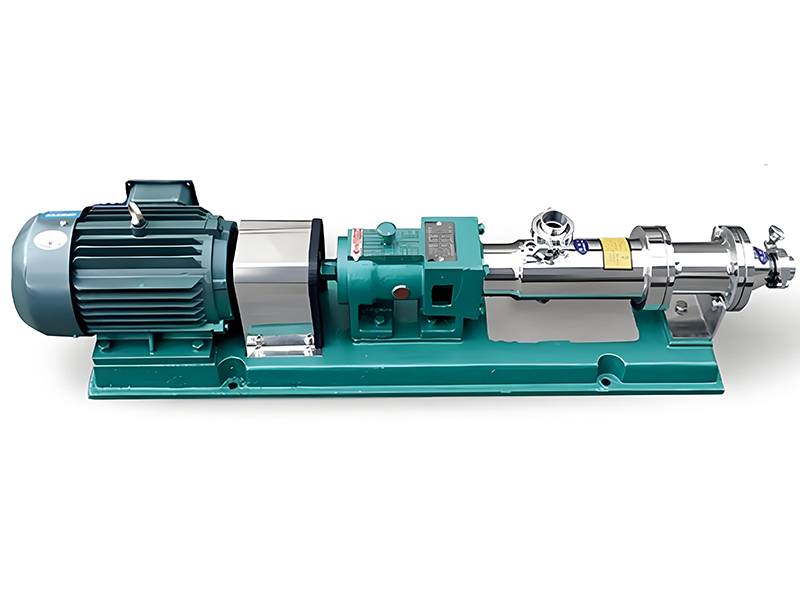
A vertical screw pump is a type of positive displacement pump in which one or more
helical screws (rotors) operate inside a closely fitting stator or pump casing, oriented in a vertical
configuration. As the screw or screws rotate, they convey the pumped medium from the inlet at the lower
end of the pump to the discharge at a higher elevation, generating significant static head
and pressure.
In a vertical arrangement, the pump axis is perpendicular to the ground, which makes vertical screw pumps
particularly suitable for:
- Pumping from deep sumps, pits, or tanks
- High-head transfer in multi-level process plants
- Space-constrained installations where footprint must be minimized
- Applications requiring a submerged inlet and a dry-mounted drive
Vertical screw pumps combine the inherent benefits of screw-type positive displacement pumps with the
installation advantages of vertical pump configurations. They are often selected when centrifugal pumps
struggle to deliver the required head at low or moderate flow rates, or when fluids have higher viscosity
or contain solids.
1.1 Key Characteristics of Vertical Screw Pumps
Characteristic |
Description (Vertical Screw Pump) |
|---|
Pump Type |
Positive displacement, screw-type rotor(s), vertical configuration |
Primary Orientation |
Vertical shaft with inlet typically at the bottom and discharge at the top or side |
Typical Head Range |
Medium to very high heads, often from 20 m up to over 300 m depending on design |
Flow Characteristics |
Nearly pulsation-free, steady flow; suitable for precise process control |
Fluid Types |
Clean, viscous, abrasive, or shear-sensitive fluids; slurries and multiphase fluids with proper design |
Installation Style |
Vertical, with pump elements in a sump, pit, well, or tank; drive generally mounted above the liquid level |
Drive Options |
Electric motors (direct-coupled or via gearbox), variable frequency drives, optional inline gear reducers |
Self-Priming Capability |
In many designs, yes, particularly when suction side is submerged |
2. How Vertical Screw Pumps Work (Working Principle)
The working principle of a vertical screw pump is based on the progressive movement of sealed cavities
or chambers, created between the rotating screw(s) and the pump housing or stator. Because this is a
positive displacement mechanism, fluid is physically carried from the suction side to
the discharge side in a controlled, continuous manner.
2.1 Basic Operating Steps
- The pump’s helical rotor(s) rotate within the close-fitting stator or casing.
- As the rotor turns, sealed cavities or pockets are formed between the screw flights and the inner surface of the casing.
- These cavities open to the suction side, drawing in fluid as the cavity volume increases.
- The rotation then transports the filled cavities upward along the screw axis.
- At the discharge end, the cavities decrease in volume, forcing the fluid out at elevated pressure and head.
Because the flow is continuous and the cavities overlap during rotation, vertical screw pumps typically
exhibit very low pulsation compared to other positive displacement pumps. This makes them particularly
suitable for sensitive processes and high-head transfer duties where stable flow is critical.
2.2 Single-Screw vs. Multi-Screw Vertical Pumps
Several mechanical configurations exist, but the most common are:
- Single-screw vertical pumps (similar to Vertical progressive cavity pumps)
- One helical rotor rotating inside an elastomeric or metallic stator
- Excellent for viscous or shear-sensitive fluids
- Good suction capabilities and high head per stage
- Twin-screw and multi-screw vertical pumps
- Two or more intermeshing screws (rotors) rotating in a shaped casing
- Very smooth flow, suitable for higher flow rates and moderate to high heads
- Capable of handling gas–liquid mixtures and certain slurries
In both cases, high-head performance is achieved by:
- Using multiple stages (progressive cavities in series)
- Optimizing rotor pitch and diameter to develop the required pressure
- Operating at appropriate speeds that balance head, efficiency, and wear
3. Why Vertical Screw Pumps Are Ideal for High-Head Applications
Vertical screw pumps are particularly attractive for high-head applications where other pump technologies
encounter limitations. High-head conditions appear when systems require substantial elevation changes,
long-distance piping, or significant pressure to overcome process resistance or backpressure.
3.1 Advantages in High-Head Service
Benefit |
Relevance to High-Head Applications |
|---|
High pressure capability |
Positive displacement action allows high discharge pressures and high heads without excessive speed increases. |
Efficient at low to moderate flow rates |
Ideal when required head is extremely high but the flow demand is moderate, a condition where centrifugal pumps can be inefficient. |
Stable flow under varying pressure |
Flow is mainly determined by speed, not system head; this offers predictable performance even as system resistance changes. |
Vertical configuration |
Enables direct lift from deep pits or wells to high discharge elevations, reducing the need for multiple pump stages in series. |
Self-priming behavior (in many designs) |
Helpful when suction conditions are challenging, or when the pump is located above the suction source but partially submerged. |
Good NPSH characteristics |
Vertical installation allows the pump inlet to be placed well below the liquid level, improving NPSHA and reducing cavitation risk. |
Reduced footprint |
High head is generated in a vertical column, minimizing floor space compared to long horizontal pumping trains. |
3.2 Comparison: Vertical Screw Pumps vs. Vertical Turbine Pumps
Vertical turbine pumps (a centrifugal type) are also widely used for high-head duties. The choice between
vertical screw pumps and vertical turbine pumps depends on the fluid properties and duty requirements.
Criteria |
Vertical Screw Pump |
Vertical Turbine Pump |
|---|
Pump Type |
Positive displacement |
Centrifugal, multi-stage |
Best for |
High head, low to medium flow, viscous or solids-laden fluids |
High head, medium to high flow, clean or slightly contaminated fluids |
Flow vs. Pressure Relationship |
Nearly constant flow, less affected by pressure changes |
Flow strongly influenced by system head and pump curve |
Viscosity Sensitivity |
Handles higher viscosities with better efficiency |
Efficiency drops quickly with increasing viscosity |
Solids Handling |
Can be designed for slurries and suspended solids |
More limited ability to pass solids without damage |
Shear Impact |
Low-shear, gentle handling |
Higher shear compared to screw pumps |
Installation Complexity |
Compact vertical column; simpler alignment for shorter lengths |
Multiple bowls, long shafts; alignment and installation can be complex |
4. Design Features of Vertical Screw Pumps
Vertical screw pumps for high-head applications have several design elements that distinguish them from
horizontal pumps or from low-pressure screw pumps. Understanding these features helps in selection,
specification, and troubleshooting.
4.1 Main Components
- Rotor or rotors
- Helical screws with specific pitch, diameter, and flight geometry
- Made from alloy steel, stainless steel, duplex, or other engineered materials
- Surface-hardened or coated for abrasion and corrosion resistance in demanding services
- Stator or pump casing
- In single-screw designs: typically an elastomeric stator bonded to a metallic tube, or a metallic stator with precision machining
- In multi-screw designs: close-fitting housing with shaped bores to accommodate intermeshing screws
- Drive shaft and coupling
- Vertical shaft transmits torque from the drive motor or gearbox to the rotor(s)
- Flexible couplings compensate for slight misalignment and reduce vibration transfer
- Bearings and thrust support
- Upper bearings support radial loads and maintain alignment
- Thrust bearings handle axial loads from high discharge pressures
- Sealing system
- Mechanical seals, labyrinth seals, or stuffing boxes
- Designed to withstand high pressure and temperature as required
- Suction inlet and discharge nozzle
- Inlet located at or near the pump bottom, often submerged in fluid
- Discharge located at the top of the pump or on the side, above the liquid level
- Support structure and baseplate
- Structural elements that carry the weight of the vertical column and drive assembly
- Anchor points for installation on concrete foundations or steel structures
4.2 Materials of Construction
Materials are selected based on the pumped fluid, temperature, pressure, and environment.
Pump Component |
Common Material Options |
Selection Considerations |
|---|
Rotor(s) |
Carbon steel, stainless steels (304, 316), duplex stainless, tool steel, specialty alloys |
Corrosion resistance, hardness, wear resistance, compatibility with process fluid |
Stator (if elastomeric) |
NBR, EPDM, FKM, HNBR, natural rubber, specialty elastomers |
Chemical compatibility, temperature range, abrasion level, swell characteristics |
Casing / Housing |
Cast iron, ductile iron, carbon steel, stainless steel, duplex |
Mechanical strength, corrosion resistance, pressure rating |
Shaft |
Carbon steel, stainless steel, duplex steel |
Torsional strength, corrosion resistance, fatigue life |
Bearings |
Anti-friction bearings (rollers, balls) with appropriate metallurgy and seals |
Load capacity, lubrication method, temperature |
Seals |
Mechanical seals with silicon carbide, tungsten carbide, or carbon faces; elastomer O-rings |
Pressure, fluid compatibility, possibility of dry-running, solids presence |
4.3 Configuration Variants
Within the general category of vertical screw pumps, several configuration variants exist:
- Wet-pit vertical screw pumps
- Rotating elements located in a wet well or sump
- Drive and bearings mounted above the liquid level
- Used for wastewater, stormwater, and industrial pits where solids may be present
- Can- or barrel-type vertical screw pumps
- Installed in a vertical can or barrel connected to a suction line
- Often used when NPSH conditions are critical
- Submerged drive vertical screw pumps
- Entire pump, including motor, is submerged (less common for high-head screw types)
- Used in certain hazardous or remote installations
5. Performance Parameters and Typical Specifications
When specifying or comparing vertical screw pumps, several performance parameters are considered:
- Flow rate (Q)
- Head (H)
- Discharge pressure
- Speed (rpm)
- Power consumption
- Efficiency
- Maximum allowable working pressure (MAWP)
- Temperature limits
- Viscosity range
- Solids size and concentration
5.1 Example Performance Ranges
Actual performance depends on the specific design and size. The table below provides illustrative,
non-binding typical ranges for high-head vertical screw pump systems.
Parameter |
Typical Range for Vertical Screw Pumps (High-Head Service) |
|---|
Flow rate |
From a few m3/h up to several hundred m3/h (often 1–500 m3/h) |
Total head |
Approx. 20 m up to 300+ m, depending on stages and design |
Discharge pressure |
Commonly up to 30 bar or more for specialized designs |
Viscosity range |
From low-viscosity liquids up to several hundred thousand cP with appropriate sizing |
Operating temperature |
Typical range from -20 °C to +150 °C or higher with suitable materials |
Solids handling |
Can accommodate suspended solids; maximum size and concentration depend on design and clearances |
Speed |
Commonly from 200 rpm to 3000 rpm; often controlled via VFD for high-head duties |
Installation depth |
Can be tailored to sump depth; columns from 1 m to over 15 m are possible in many projects |
5.2 Key Specification Parameters
When generating a data sheet or specification for a vertical screw pump in high-head service, typical
items include:
- Design duty point (flow and head)
- Minimum and maximum operating points
- Fluid description (composition, viscosity, temperature, solids content, corrosivity)
- Required NPSH margin
- Continuous and maximum allowable working pressure
- Materials of construction for all wetted parts
- Seal type and seal plan (if applicable)
- Installation depth and geometry (sump dimensions, inlet arrangements)
- Power supply and motor specifications
- Instrumentation (pressure, temperature, vibration sensors, level controls)
- Applicable design codes and standards (API, ISO, ANSI, local regulations)
6. Advantages of Vertical Screw Pumps in Industrial Use
In addition to their high-head capability, vertical screw pumps offer a combination of operational and
practical benefits that make them very attractive across industries.
6.1 Operational Advantages
- High efficiency at design point for demanding head requirements
- Stable, nearly pulsation-free flow suitable for process control
- Positive displacement characteristics allowing accurate metering and predictable performance
- Good suction performance, especially when the suction inlet is submerged
- Ability to handle a wide range of viscosities, from thin liquids to heavy oils and slurries
- Non-clogging design possibilities when properly engineered for solids
- Gentle handling of the liquid with low shear, preserving product quality in sensitive applications
6.2 Mechanical and Installation Advantages
- Compact footprint, critical in congested plants or retrofit projects
- Dry motor location above the liquid level, making motor and drive easier to access
- Simple shaft sealing arrangements because pressure boundaries and seals can be located above the liquid level
- Improved safety in some installations by keeping rotating equipment away from walkways
- Flexible layout: vertical pumps can be placed directly above wells, tanks, or underground structures
6.3 Life-Cycle and Reliability Benefits
- Long service life with proper material selection and maintenance
- Predictable wear patterns in screw elements and stators for planned refurbishment
- Ease of condition monitoring due to accessible drive-end components
- Energy savings over time when compared to oversized or misapplied centrifugal pumps in high-head, low-flow situations
7. Typical Applications of Vertical Screw Pumps
Vertical screw pumps are used in many sectors where high-head pumping, reliable operation, and versatile
fluid handling are required.
7.1 Water and Wastewater
- Pumping from deep wet wells to elevated treatment stages
- Transfer of sludge and thickened slurries to digesters or dewatering units
- Stormwater lift from underground retention tanks
- Leachate pumping in landfill or environmental remediation projects
7.2 Power Generation
- High-head condensate return in certain layouts
- Fuel oil transfer and recirculation in boiler systems
- Cooling water and auxiliary service lift from lower reservoirs to turbine or condenser levels
7.3 Oil & Gas and Petrochemicals
- Crude oil, heavy oil, and multiphase transfer from sumps or underground structures
- Produced water and oily water separation system lifting
- Bitumen and high-viscosity hydrocarbon elevation
7.4 Chemical and Process Industries
- Corrosive or viscous chemical transfer to elevated reactors and storage tanks
- Polymers, resins, and adhesives pumping where both viscosity and head are high
- Solvent and intermediate product movement in multi-level process plants
7.5 Food, Beverage, and Pharmaceutical
- Syrup, chocolate, and concentrated liquid food in vertical transfer operations
- Hygienic, low-shear transfer of dairy or beverage products to elevated process vessels (with sanitary designs)
- Active pharmaceutical ingredient (API) slurries in high-head feeding applications
7.6 Mining and Minerals
- Thickened tailings or slurry pumping from underground to surface facilities
- Reagent dosing and recirculation with high static head
- Dewatering of shafts and sumps where solids are present
8. Sizing and Selection Considerations for High-Head Vertical Screw Pumps
Proper sizing and selection are critical for ensuring that a vertical screw pump delivers reliable
performance, long life, and acceptable operating costs in high-head applications.
8.1 Hydraulic Sizing Steps
- Define duty conditions
- Required flow rate (normal, minimum, maximum)
- Total dynamic head (TDH), including static lift, friction losses, and safety margin
- Determine fluid properties
- Density, viscosity, temperature, solids content, vapor pressure
- Chemical compatibility requirements for materials and seals
- Check NPSH conditions
- Calculate available NPSH (NPSHA) from the system
- Compare with pump NPSH required (NPSHR) including margin, especially at maximum flow
- Select speed and stages
- For high-head, consider multi-stage designs or longer progressive cavity sections
- Balance speed for efficiency vs. wear and noise
- Specify materials and sealing
- Match materials to fluid corrosion behavior and expected life
- Choose seal type according to pressure and environmental constraints
8.2 Example Sizing Data Sheet (Illustrative)
Parameter |
Example Value (Illustrative Only) |
|---|
Flow rate (design) |
40 m3/h |
Total dynamic head |
150 m |
Fluid |
Viscous process liquid with light solids, 50 cP, 60 °C |
Installation type |
Vertical, wet well, sump depth 8 m |
Materials (wetted parts) |
Stainless steel casing and rotor, elastomeric stator (EPDM) |
Maximum operating pressure |
20 bar |
Drive |
Electric motor with variable frequency drive, 30 kW, 1500 rpm base speed |
Seal type |
Single mechanical seal with appropriate flush plan |
Ambient conditions |
Indoor industrial plant, 0–40 °C ambient temperature |
8.3 Selection Checklist for High-Head Vertical Screw Pumps
- Confirm that a positive displacement solution is appropriate for the process.
- Verify that the pump can achieve the required head at the target flow without exceeding allowable speed or torque.
- Ensure adequate NPSH, especially during startup and at maximum flow.
- Evaluate fluid viscosity range (cold start vs. normal operation) and its influence on torque and power.
- Consider potential solids loading and required clearance or special design features.
- Review installation constraints: sump depth, space above the pump, maintenance access.
- Confirm availability of instrumentation and controls (level sensors, pressure transmitters, VFD control).
- Assess life-cycle cost: energy consumption, expected wear, stator or rotor replacement intervals.
9. Installation Guidelines for Vertical Screw Pumps
Proper installation is essential to realize the full benefits of vertical screw pumps in high-head
applications. Installers should follow manufacturer instructions and any applicable codes, but general
best practices include the following.
9.1 Foundation and Support
- Install the pump on a rigid, level concrete foundation or steel structure.
- Ensure that foundation bolts are correctly located and properly grouted.
- Verify vertical alignment of the pump column before final tightening.
- Use flexible connections in the discharge piping to account for thermal expansion and slight movement.
9.2 Sump and Inlet Design
- Provide adequate submergence above the inlet to avoid air entrainment and vortices.
- Design the sump to minimize sediment buildup near the pump inlet.
- Install screens or bar racks if large debris is present, balancing protection with acceptable head loss.
- Ensure sufficient clearance from walls and other structures to allow smooth flow into the pump.
9.3 Discharge Piping and Valves
- Use appropriately sized discharge piping to limit friction losses while maintaining design velocity.
- Include isolation valves for maintenance and check valves to prevent reverse flow when the pump is stopped.
- Install pressure gauges near the discharge to monitor pump performance.
- Consider surge suppression or relief valves for long header systems or where rapid valve closure is possible.
9.4 Alignment and Commissioning
- Align the motor and pump shaft according to specified tolerances, taking into account thermal growth.
- Verify lubrication of bearings, gearboxes, and seals prior to startup.
- Check electrical wiring, rotation direction, and protective devices such as overload relays.
- Start up the pump with discharge valve partially open if recommended to protect against overpressure.
- Record baseline operating data: flow, pressures, vibration, temperature, and power draw.
10. Operation and Maintenance of Vertical Screw Pumps
Vertical screw pumps are known for reliability and longevity, but consistent maintenance practices are
required to maintain high-head performance and avoid unplanned outages.
10.1 Routine Inspection Tasks
- Check bearing temperatures and lubrication levels.
- Monitor vibration and noise for changes that may indicate wear or misalignment.
- Inspect seals and packing for leakage.
- Observe motor current draw and compare to baseline levels.
- Visually inspect sump, suction conditions, and discharge piping for blockages or leaks.
10.2 Maintenance Intervals
Maintenance frequency depends on operating conditions and criticality. Typical tasks may include:
Task |
Typical Interval (Indicative) |
|---|
Visual inspection for leaks and unusual noise |
Daily to weekly |
Check lubrication levels and replenish |
Monthly or per manufacturer recommendation |
Vibration and temperature trend analysis |
Monthly to quarterly |
Seal inspection and minor adjustments |
Quarterly or as required |
Stator and rotor wear evaluation |
Annually or based on operating hours and service severity |
Major overhaul (bearings, seals, screws, stators) |
Every few years, dependent on duty cycle and environment |
10.3 Common Wear Areas
- Stator (elastomer) wear caused by:
- Abrasive solids in the fluid
- Overheating due to dry running
- Chemical incompatibility with the elastomer
- Rotor wear due to:
- Abrasion from particulates
- Corrosion if materials are not correctly selected
- Bearing wear from:
- Misalignment
- Lubrication issues
- Excess vibration produced by hydraulic or mechanical imbalance
- Seal deterioration as a result of:
- Excessive pressure or temperature
- Dry running or insufficient flush
- Chemical attack
10.4 Best Practices for Long Life
- Operate within the specified range for flow, head, temperature, and solids content.
- Use a variable frequency drive to ramp speed gradually and avoid hydraulic shocks.
- Ensure reliable level control in the sump to prevent dry running.
- Implement condition-based maintenance with vibration and temperature monitoring.
- Document all changes in operating conditions or process parameters that can affect pump behavior.
11. Energy Efficiency and Life-Cycle Cost Considerations
Energy consumption and life-cycle cost are central to modern pump selection. For high-head applications,
vertical screw pumps can deliver energy efficiency advantages, especially under certain flow and fluid
conditions.
11.1 Energy Considerations
- Positive displacement characteristics mean efficiency is less sensitive to head variations than with centrifugal pumps.
- High-viscosity fluids can be pumped more efficiently by screw pumps than by centrifugal machines in many cases.
- Variable speed control (via VFDs) allows fine-tuning of flow and head, reducing throttling losses.
- Accurate matching of pump size to duty reduces energy waste from operating far from best efficiency regions.
11.2 Life-Cycle Cost Elements
Cost Element |
Vertical Screw Pump Considerations |
|---|
Initial purchase |
Can be higher than some centrifugal pumps, especially for customized high-head vertical designs. |
Installation |
Vertical design may reduce structural modifications but requires careful alignment and foundation work. |
Energy consumption |
Potential savings in high-head, low to medium flow, and high-viscosity scenarios. |
Maintenance and spare parts |
Periodic replacement of stators and rotors; predictable but must be planned into budgets. |
Downtime risk |
High reliability reduces unplanned outages if proper maintenance is performed. |
Service life |
Long operational life possible; design and environment will dictate actual time frames. |
12. Safety and Environmental Considerations
Vertical screw pumps handling high heads and potentially hazardous fluids must meet stringent safety
and environmental requirements.
12.1 Safety Aspects
- Implement guards and covers for rotating components and couplings.
- Ensure pressure relief or overpressure protection is in place where required.
- Design for safe access to the pump for inspection and maintenance at elevated platforms.
- Use compliant electrical equipment in hazardous areas (e.g., explosion-proof motors where needed).
- Provide clear lockout/tagout procedures for pump isolation prior to maintenance.
12.2 Environmental Protection
- Use double seals or secondary containment where leakage must be minimized.
- Contain sump overflows and provide spill control for hazardous liquids.
- Use materials that minimize the risk of contamination from corrosion products.
- Monitor and control noise, especially in residential or noise-sensitive zones.
13. Emerging Trends in Vertical Screw Pump Technology
Vertical screw pumps continue to evolve as new materials, design tools, and control strategies become
available. Several trends are currently influencing this technology in high-head applications.
13.1 Advanced Materials and Coatings
- Use of duplex and super duplex stainless steels for aggressive fluids.
- Hard-facing and ceramic coatings to improve wear resistance in abrasive slurries.
- Development of elastomers with improved chemical and thermal stability.
13.2 Digitalization and Smart Pumping
- Integration with plant automation for real-time monitoring and control.
- Predictive maintenance through vibration, temperature, and power analytics.
- Remote support and diagnostics using IoT connectivity.
13.3 Energy Optimization
- Widespread adoption of variable speed drives tailored to high-head screw pump behavior.
- Improved hydraulic designs reducing internal losses.
- Optimization of multi-stage or progressive cavity configurations for best overall efficiency.
14. Frequently Asked Questions (FAQ) About Vertical Screw Pumps
14.1 Are vertical screw pumps suitable for very high heads?
Vertical screw pumps can be engineered for very high heads, often exceeding 200–300 m,
by using multiple stages or extended progressive cavity sections. The actual achievable head depends on
the specific design, materials, and speed, but they are widely used where high static lifts and
substantial pressure are required.
14.2 Can vertical screw pumps handle solids?
Many vertical screw pumps are designed to handle suspended solids, slurries, and fibrous materials.
The maximum particle size and solids concentration must be reviewed against the pump’s clearances and
wear resistance. In abrasive services, material selection and speed reduction are especially important.
14.3 How do vertical screw pumps compare to horizontal screw pumps?
The hydraulic principle is similar, but in a vertical screw pump, the orientation allows direct pumping
from a lower level to a higher discharge without occupying large floor space. Maintenance access
patterns and sealing arrangements also differ. Vertical designs are favored where space or elevation
requirements drive the layout.
14.4 Are vertical screw pumps self-priming?
Many vertical screw pump designs exhibit self-priming behavior, especially if the
suction inlet is submerged. Even when the inlet is not fully submerged, the positive displacement
principle often enables priming under certain conditions, but each installation should be evaluated
individually based on fluid properties and suction geometry.
14.5 Can variable speed drives be used with vertical screw pumps?
Variable frequency drives (VFDs) are commonly used with vertical screw pumps to:
- Adjust flow rate according to process demands
- Optimize head and minimize throttling losses
- Reduce mechanical stress during startup and shutdown
- Improve overall energy efficiency and extend equipment life
14.6 What standards and guidelines apply to vertical screw pumps?
Vertical screw pumps may be designed and tested according to general pump standards such as:
- ISO and DIN standards for positive displacement pumps
- API standards where applicable in oil and gas sectors
- Local codes for pressure vessels, electrical safety, and environmental protection
The exact standard set depends on the industry, region, and project specification.
15. Summary: Vertical Screw Pumps for High-Head Applications
Vertical screw pumps provide a reliable, efficient, and versatile solution for
high-head pumping tasks across water, wastewater, power, oil and gas, chemical, food, and mining
industries. Their positive displacement operating principle, combined with vertical configuration,
makes them particularly effective when:
- Static lifts are large and overall heads are high
- Fluids are viscous, contain solids, or are shear-sensitive
- Space is limited, and a compact vertical footprint is required
- Stable, low-pulsation flow is critical for process performance
To fully benefit from vertical screw pumps in high-head applications, careful attention must be paid to:
- Accurate sizing and selection based on duty conditions
- Appropriate material and seal choices
- Sump and piping design that promotes smooth hydraulic conditions
- Consistent maintenance and condition monitoring
With these considerations in place, vertical screw pumps can offer long-term, cost-effective operation
and dependable high-head performance in a wide range of industrial and municipal environments.






 Phone
Phone
Comment
(0)